


House Tours
A Modern Toronto Home Designed For Visual Accessibility

Photography by Myles Wiltshire | Design by Marcus Iafrate Design
House Tours
A Modern Toronto Home Designed For Visual Accessibility
Sleek style and a linear layout are at the heart of this infill project in Toronto—but aesthetics aren’t the only thing at play.
Behind its contemporary facade, this home’s interior is a portrait of transitional style. It’s also designed for long-term accessibility.
The homeowner has a visual impairment known as retinitis pigmentosa, a degenerative eye disease that progressively decreases peripheral and night vision. “Outside of meeting the client’s visual needs, the biggest goal of this project was making the best use of such small square footage,” says designer Marcus Iafrate, the founder and principal designer with Marcus Iafrate Design. The main floor, for example, is only 545 square feet.
“We had to be creative in our layouts, rethinking how we use space to create unique yet functional storage solutions,” he adds.
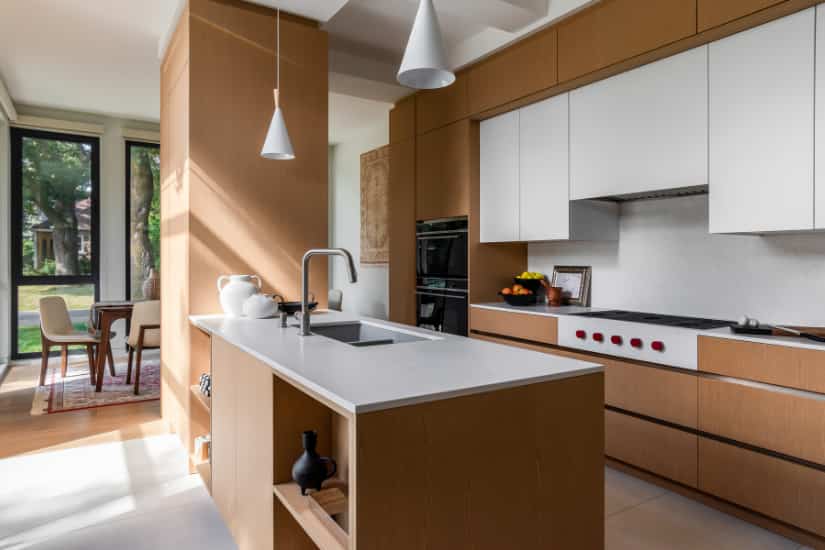
Photography by Myles Wiltshire
The original architectural plans laid out a traditional main-floor space with designated rooms. When Iafrate joined the project, he suggested a more open-concept option that eliminated the proposed powder room, allowing for sightlines from the front to the back of the home.
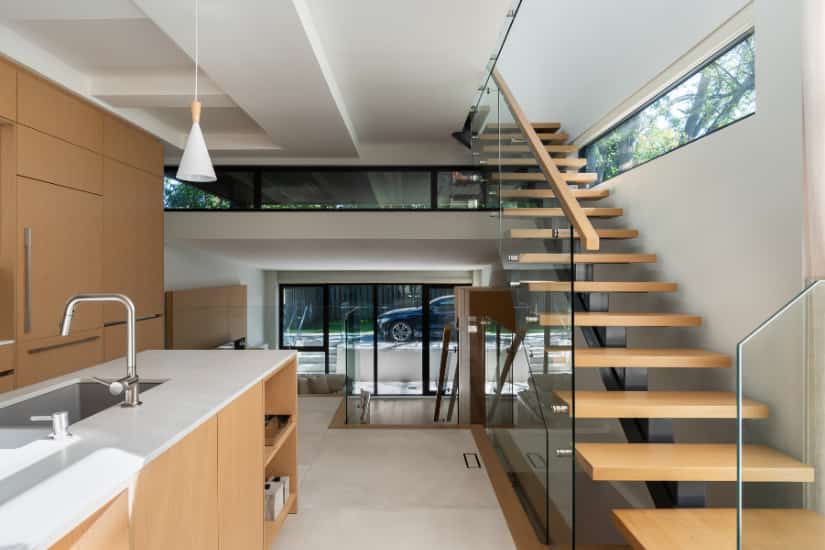
“We decided on a galley-like plan, which ensures a very linear path of travel for our client,” says Iafrate. “It also put the staircases, which could pose a fall hazard, were in line with paths of travel and not inconspicuous.”
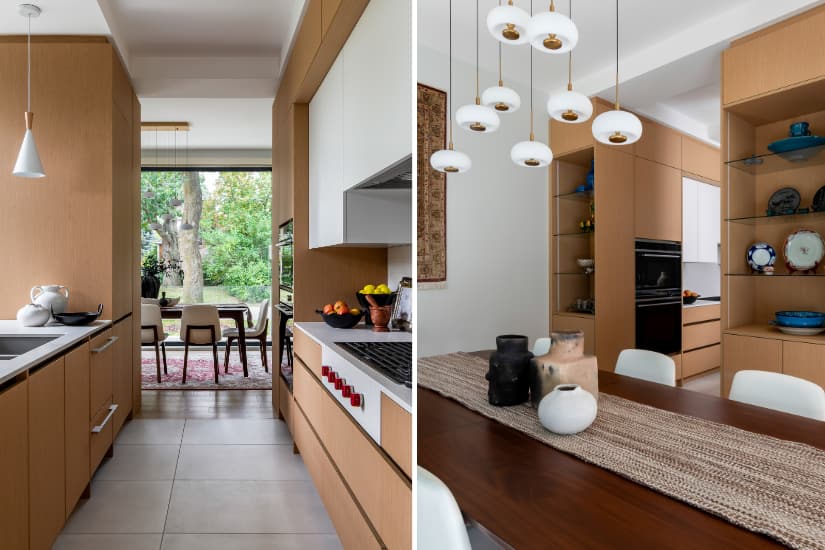
For added strategic storage, the kitchen island, front entry closet, and dining room cabinets are combined with the same focal millwork.
Photography by Myles Wiltshire
Located in the home's bright front window, the dining room features easy access to the kitchen.
“During the day, there is an abundance of natural light, and our client needs little to no lighting assistance navigating their home,” says Iafrate. “However, at night, lighting becomes very important.” The designer used layered lighting—including ambient, task, and accent—to infuse the space with an array of visual cues.
Photography by Myles Wiltshire
Another key objective for the design was to use matte and low-sheen materials. “Sheen and glare can be problematic for the homeowner, so we had to use the right materials,” says Iafrate. He also relied on material transitions to help viscerally recognize the difference between spaces.
The stairs, for example, feature a wooden nosing that functions as a tactile indicator before the first step. Each tread on the stairs is lit so each step is defined.
Photography by Myles Wiltshire
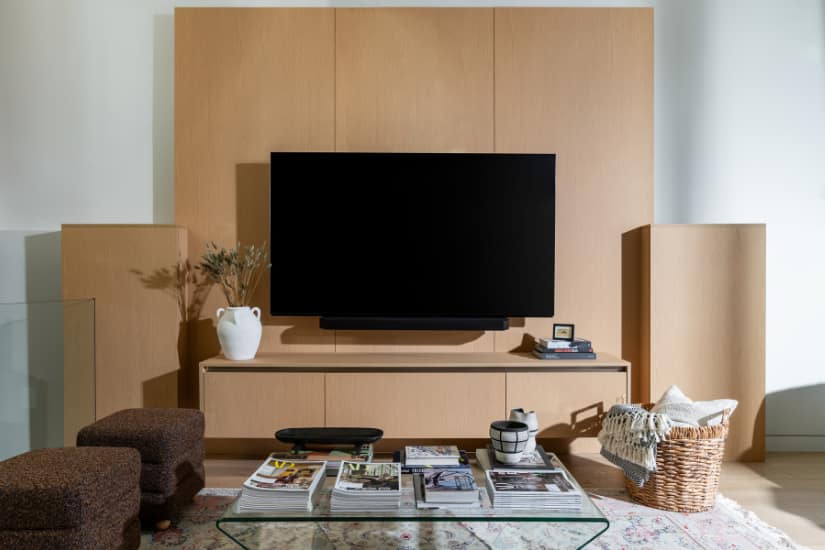
The sunken living room is a multipurpose space in the home, acting as the entrance to the backyard and a mudroom. “To avoid the clients looking at the mess of shoes and coats while trying to relax or watch TV in their living room, we made use of custom millwork to add function to the space,” says Iafrate.
A sleek unit serves as storage, as well as a wet bar for coffee and tea. “When the unit is closed, none are the wiser as to its function,” says Iafrate.
Recommended

Recommended





Comments