


Design Experts
How To Unify An Open-Concept Living & Dining Room, According To A Designer

Photography by Britney Townsend | Design & Styling Kat Rose Design
Design Experts
How To Unify An Open-Concept Living & Dining Room, According To A Designer
Designer Kat Rose shares how she unified this open-concept living and dining room with a warm, welcoming palette and meaningful displays of her creative clients’ collections.
"We were brought in to breathe life into this newly rebuilt home in Collingwood, Ont., and make it feel warm, lived in, and personal," says designer Kat Rose. As well, the clients asked for defined zones on the open-concept main floor, but also a sense of continuity and connection.
"A consistent colour palette created visual flow from one area to the next,” says Kat, who repeated and layered tones throughout for cohesion. She carefully chose upholstered furniture for both comfort and longevity, and then added in locally sourced vintage and antique pieces for a mix of furnishings that brings warmth and a sense of history. Making a huge impact are Kat’s thoughtful displays of the owners’ much-loved art and objects. “It was important that the space reflect their creative lives and travels, incorporating their collection of art, handmade artist dolls and meaningful pieces gathered over the years,” she says. “Designing for clients who value storytelling through objects allowed the final space to feel personal, grounded and complete.”
Read on for her invaluable tips on how to infuse comfort, history, and welcoming beauty into an open-concept space in a newly rebuilt home.
Designer Advice For An Open-Concept Home
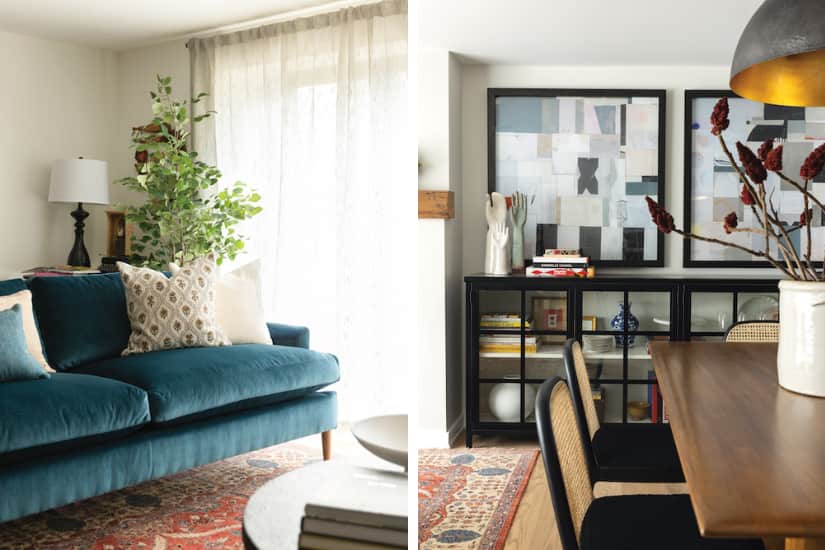
- Ground your space. In an open-concept home, an area rug easily defines where one space ends and another begins. “A rug also adds comfort underfoot and anchors your furniture,” says Kat.
- Use a colour palette that transitions well. “When incorporating colour, balance bold hues with grounding neutrals,” says Kat. In these spaces, white and black are the grounding colours that provide a visual anchor throughout the home; pops of colour add personality.
- Don’t be colour shy. “Colour can visually enhance and elevate your space,” says the designer. “Accessories like pillows, art, books and throws are easy ways to introduce colour, but if you dare to be bold, try bringing in colour with a sofa, accent chair or area rug.”
- Mix wood tones thoughtfully. “Combining different wood finishes adds depth and warmth,” says Kat. “For a cohesive look, pair light and dark woods and repeat tones throughout the room for a unified feel.”
Photography by Britney Townsend | Design & Styling Kat Rose Design
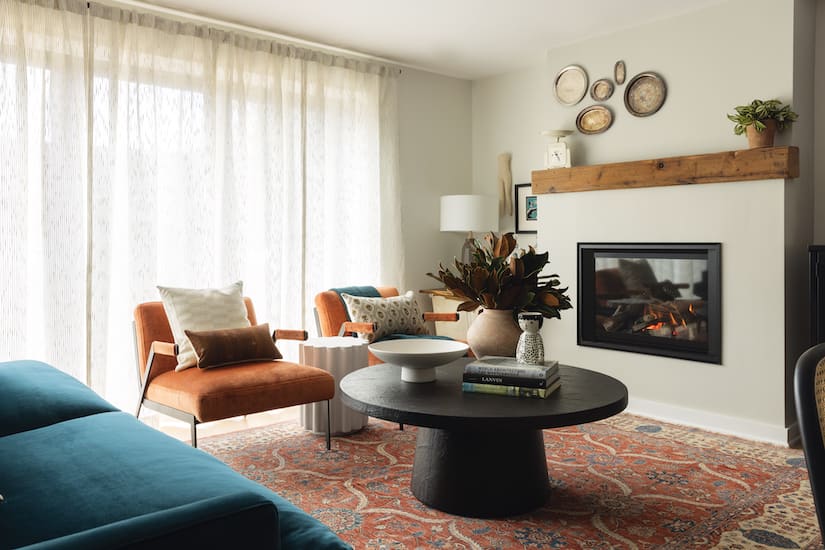
- Opt for a sofa instead of a sectional. In smaller rooms, a sofa opens up more floor space, allowing for easy movement and a less crowded feel. Complement it with a couple of accent chairs to provide flexible seating options and to enhance the overall aesthetic.
- Create connection through careful furniture layout. In an open-concept space, try angling accent chairs to face adjoining areas. This keeps each zone defined but also visually connected and inviting.
- Mix high with low. High-end pieces alongside more affordable finds creates a personalized look that’s economical, curated and approachable.
- Combine vintage treasures with modern pieces for character and depth. “Finding the right blend creates a timeless look that feels fresh and personal,” says Kat.
- Frame your view. “Window treatments bring visual warmth, texture and depth,” says Kat. “Light-filtering fabric lets daylight filter through the room, offering privacy without blocking the view, and when open, it beautifully frames the exterior landscape.”
Photography by Britney Townsend | Design & Styling Kat Rose Design
- Express yourself. “Our homeowners are talented individuals,” says Kat. One is a film producer, and the other is an artisan and doll maker; her creations were carefully placed throughout to bring a deeply personal touch. Says Kat, “Don’t hesitate to think outside the box and incorporate precious, meaningful pieces.”
- Style your coffee table. “Start with large statement books as a base, add fresh or faux flowers in an opaque vase to keep stems hidden, and include a catchall bowl,” says Kat. “Arrange items in thoughtful groupings and, most importantly, have fun!”
- Take a loose approach to display. “Art does not need to be centred or symmetrical,” says Kat. Try small groupings or an off-centre placement for a more dynamic feel, like the silver plates and platters above the mantel. Says Kat, “There are no hard rules. Trust your instincts.”
- Leave room to move. In a smaller dining area, using a mix of seating styles – like chairs paired with a bench – can save space and achieve an open feel. Says Kat, “A bench also tucks in neatly and adds a more casual, flexible vibe.”
- Be intentional with scale. “Choosing a few well-sized objects when styling is often more powerful and deliberate than using many smaller pieces,” says Kat. “Be selective to create a strong, balanced look."
- Include real or faux greens and florals. Incorporating plants and flowers breathes life into a design, softens hard edges, adds natural textures and gives a room vibrancy.
- Create vignettes. When styling, arrange thoughtfully designed groupings on surfaces, such as a sideboard or accent table. Says Kat, “These arrangements draw the eye and add visual interest that feels picturesque and tells a story.”


Eye-Catching Colour Combinations For Your Home





Comments