


Design Lesson
What Is Material Drenching? A Designer Explains How To Get The Look

Photography by Janis Nicolay
Design Lesson
What Is Material Drenching? A Designer Explains How To Get The Look
Colour drenching, pattern drenching, now… material drenching?
A cohesive design can mean a lot of things. Contrasting hues and fabrics are a classic way to make a room feel connected, bringing sometimes opposite features into balance. On the other end of the spectrum, so-called “drenching” trends take one particular design element—such as a single colour or scope of patterns—and infuse it throughout a space.
If you’re onboard with this idea, the next natural step might be to consider “material drenching,” something designer Kim Charbonneau says is a centuries-old design technique.
“In Europe, you’ll find plenty of examples where beautiful materials are not only on the walls but also on the ceilings and other surfaces,” says the Calgary-based designer.
We sat down with Charbonneau to get the lowdown on how to incorporate material drenching into your design, the best materials to use, and what rooms cater to the technique.
What is material drenching?
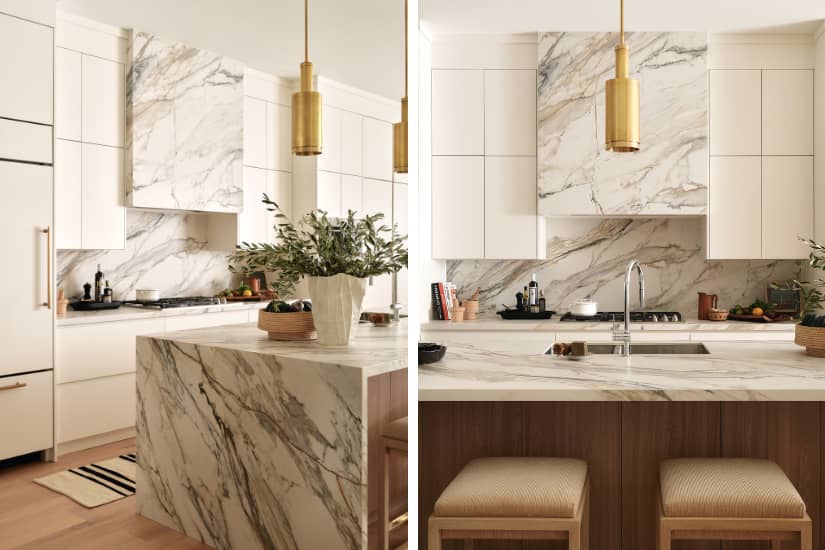
Photography by Patrick Biller
Material drenching is a design technique that uses the same material on multiple surfaces in a room. That could mean using the same material on the floors, walls, and ceilings, or even incorporating it into countertops and backsplashes.
“This technique allows a designer to incorporate a texture as well as a colour and pattern,” says Charbonneau. “It takes the colour and pattern drenching up a notch.”
What types of materials are best for material drenching?
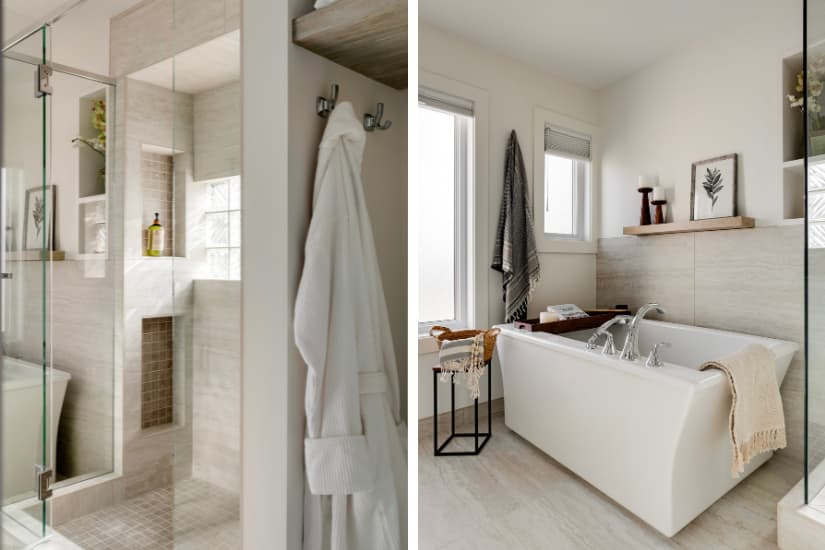
Photography by Kelly Pease
Charbonneau’s go-to materials are large format tiles and wood paneling. Lately, she’s also been drawn to microcement, a decorative cement coating.
“You can do seamless, artisan-like finishes anywhere tile could go,” she says. “[Some] regular cement bath manufacturers are also coming out with wall panels and sinks that can be coordinated together.”
Are there certain rooms in a home that look better—or might benefit more—from material drenching?
“Bathrooms are a great place to incorporate this, either in steam showers or wet rooms,” says Charbonneau. “You get the added benefit of having the space be completely waterproof as well.”
Studies or entryways are also natural spots to use the technique, particularly with moody or organic-style wood paneling.
Are there any important considerations to keep in mind when incorporating material drenching?
The first thing to note is that the technique can be pricey. Rather than using a mix of materials—notably, with traditional paint—extra wood or tiles can add an extra expense to your reno.
Also think about the intended use of the materials.
“Especially when installing something on a ceiling, check if it’s the right size or weight for that application,” says Charbonneau.
She strongly recommends hiring the correct tradesperson for the job to make sure the installation is done properly.


Eye-Catching Colour Combinations For Your Home





Comments